Most of my work is reactive. As an event photographer I show up and photograph what is in front of me. The aurora taught me to work the other way around.
It began with a downpour. Talkeetna, Alaska, 2021, first stop of the trip, rain coming down hard, and through the cloud a pulsing green, as if someone had hung a green lighthouse above the overcast. That was my first sight of the Northern Lights. I decided then to see them properly, on a clear night, and photograph them.
We had eight days left. I set an alarm for 2 a.m. every one of them, when the sky is darkest and the lights are supposed to be most active. Nothing. One night I photographed what looked like ordinary cloud and found it came out green on the back of the camera. It wasn’t what I had seen through the rain.
The next year I took my family to Whitehorse, where the brochure promised a 97% chance of seeing the aurora in three days. We arrived to a town still talking about how strong it had been the night before. On the third night it appeared for under ten minutes, so low that houses and trees hid most of it. By the time my camera was set up, it was gone.
I booked Yellowknife for September 2023, since the lights are strongest around the equinoxes, and found a houseboat far from town for the darkness. Wildfires evacuated the region that August. We went in September 2024 instead, five nights to improve the odds. By then I knew the KP index, the solar wind readings and every forecast site, and had spent weeks refreshing other people’s photographs taken from that same houseboat.
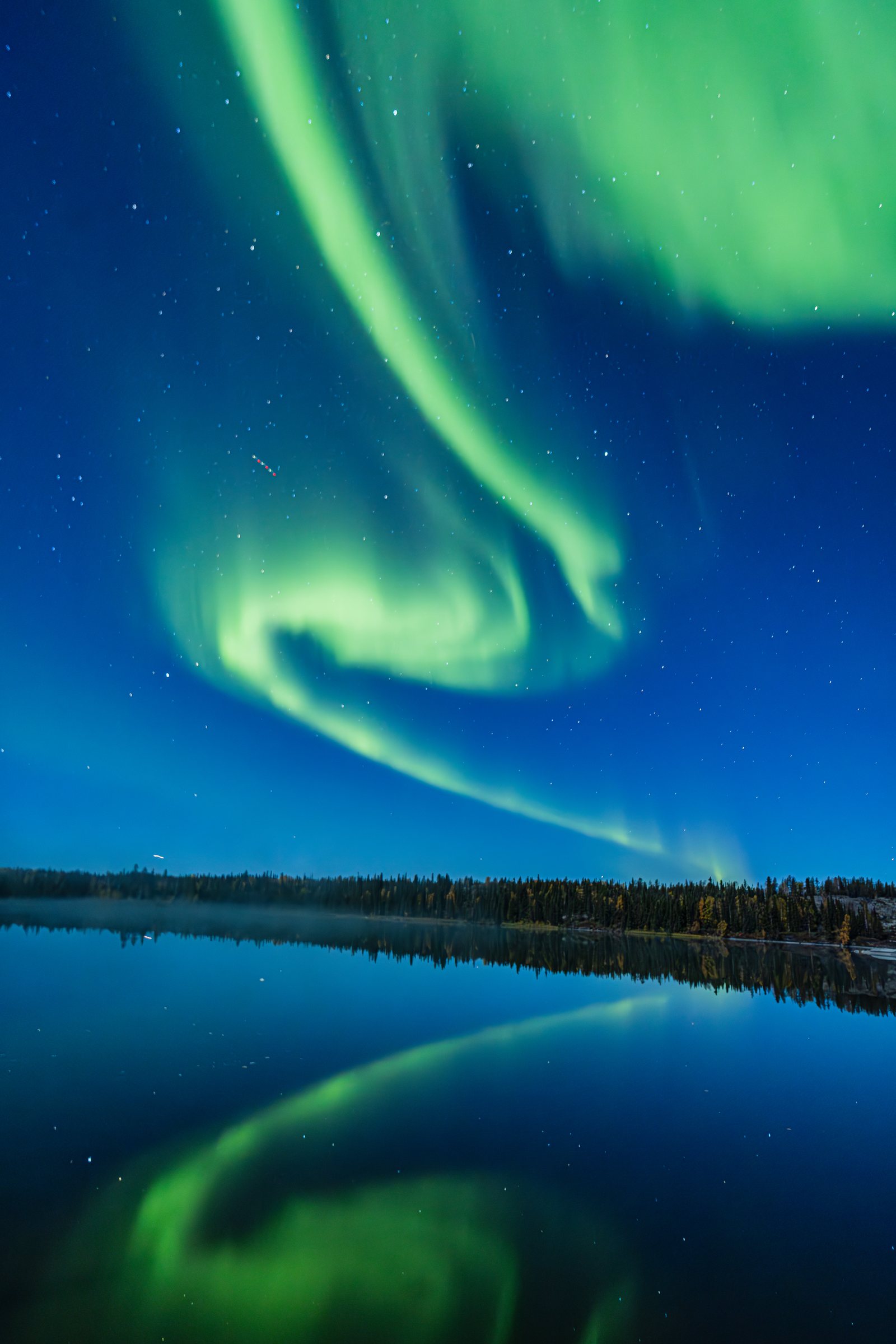
Days before we flew, the forecast settled at KP 2 to 3, on a scale that runs to 9. The hosts were booked solid and couldn’t move us. We did see it: a ribbon of pale, drifting white over still water. It was beautiful. I got a photograph. It wasn’t the photograph.
The sun runs on an eleven-year cycle, and at its peak it throws out the flares that make the strongest auroras. 2025 was that peak.
In May a storm hit KP 7. I missed the forecast and saw the results all over the internet the next morning, and the reports said it would hold another night. I dropped everything and flew to Calgary, the furthest north I could reach on a direct flight. Landed at 10 p.m., rented a car, drove two hours to Banff for dark sky, clear weather and water to catch the reflection. I reached Lake Minnewanka after midnight, ignored the no-parking signs and watched. Nothing. I tried to sleep in the car at 3 a.m. and was too cold, and too certain it would start the moment I closed my eyes. It never came. At 7 a.m. I drove back to the airport and cried most of the way. At home I deleted every aurora app I had and told myself to point my camera at something else.
Then in October the New York Times ran a piece: a flare had gone off aimed straight at Earth, bigger than May, forecast near KP 8.67. The highest I had seen in five years of watching.
This time I used everything the failures had taught me. Apps back on the phone. Furthest northern airport reachable direct from San Francisco. Then weather, which ruled out both coasts and left Edmonton: clear until 2 a.m., lights strongest between 7 and 9 p.m., flight landing at 5, and a dark-sky national park forty minutes from the airport. I booked inside a cancellation window in case the forecast turned. A friend took the dog, the kids went to their father’s. At 11 a.m. the forecast held and I flew.
I chose Elk Island for the water, and drove out early to find my spot before dark. At a lake near the quieter entrance, two cars were already pulled over with tripods at the shore. Canadian photographers, amused that someone had flown in for this and surprised I had found what they called a local secret. I was glad of them: the park was loud with wolves and elk after dark, and alone I think I would have frightened myself out of staying.
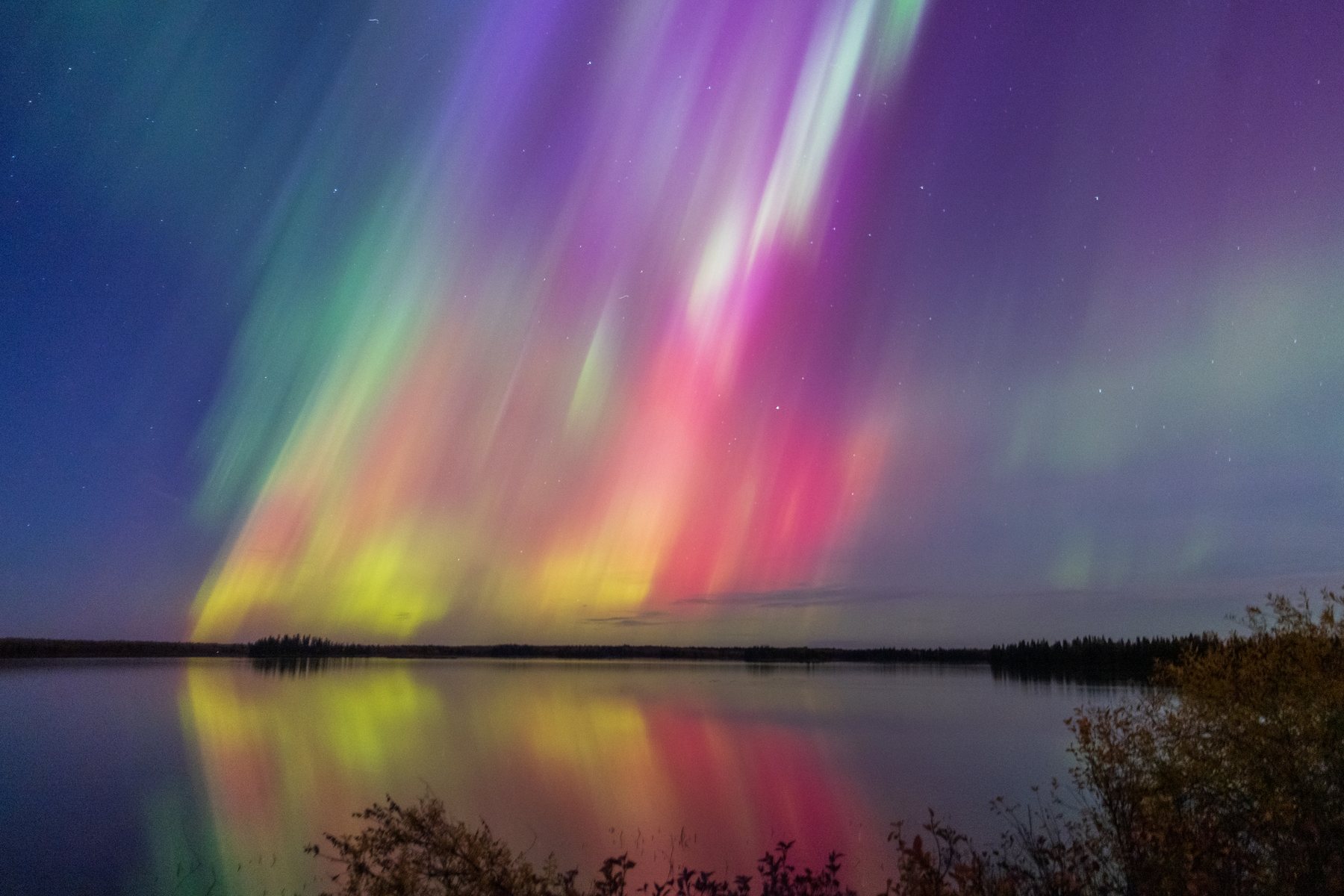
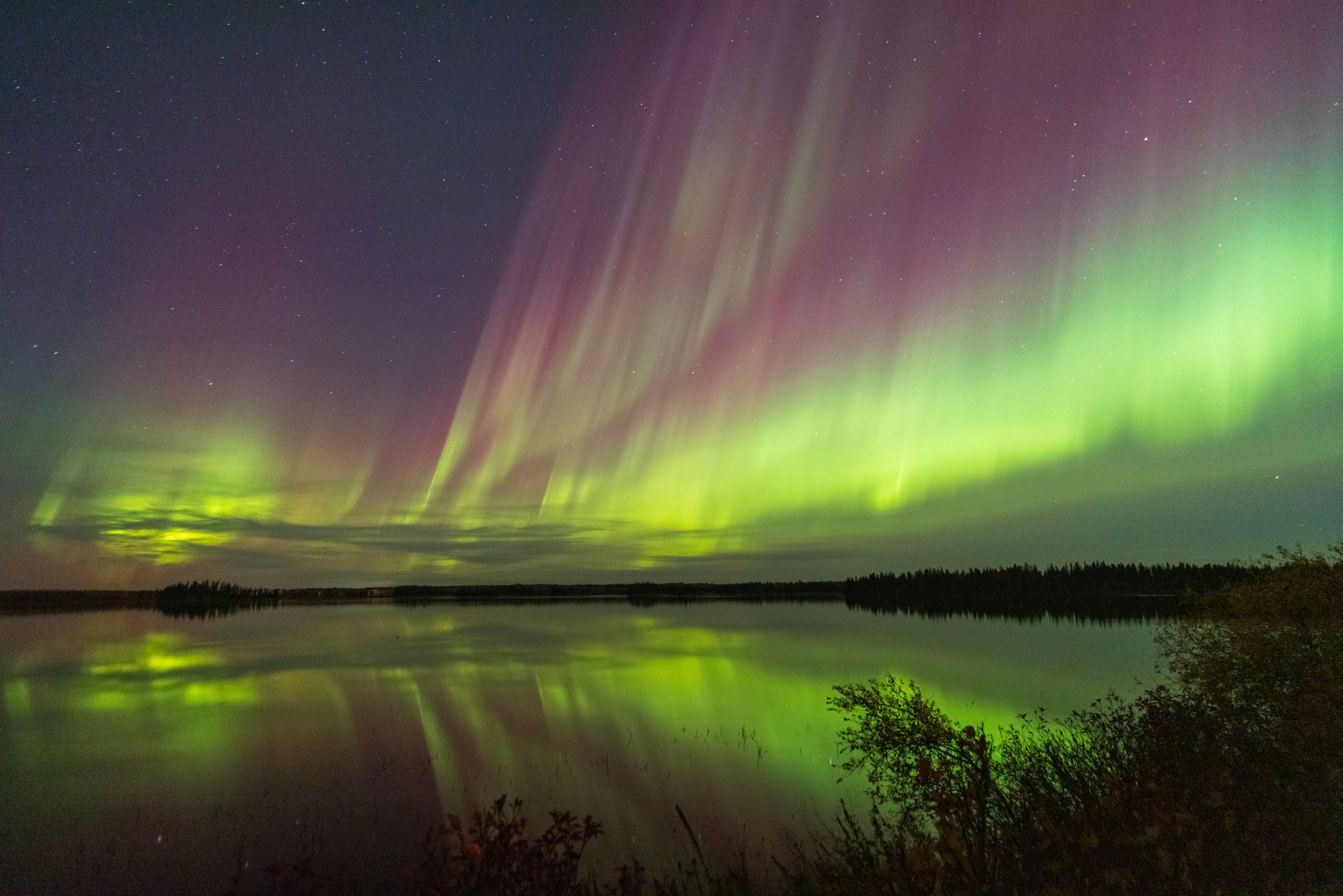
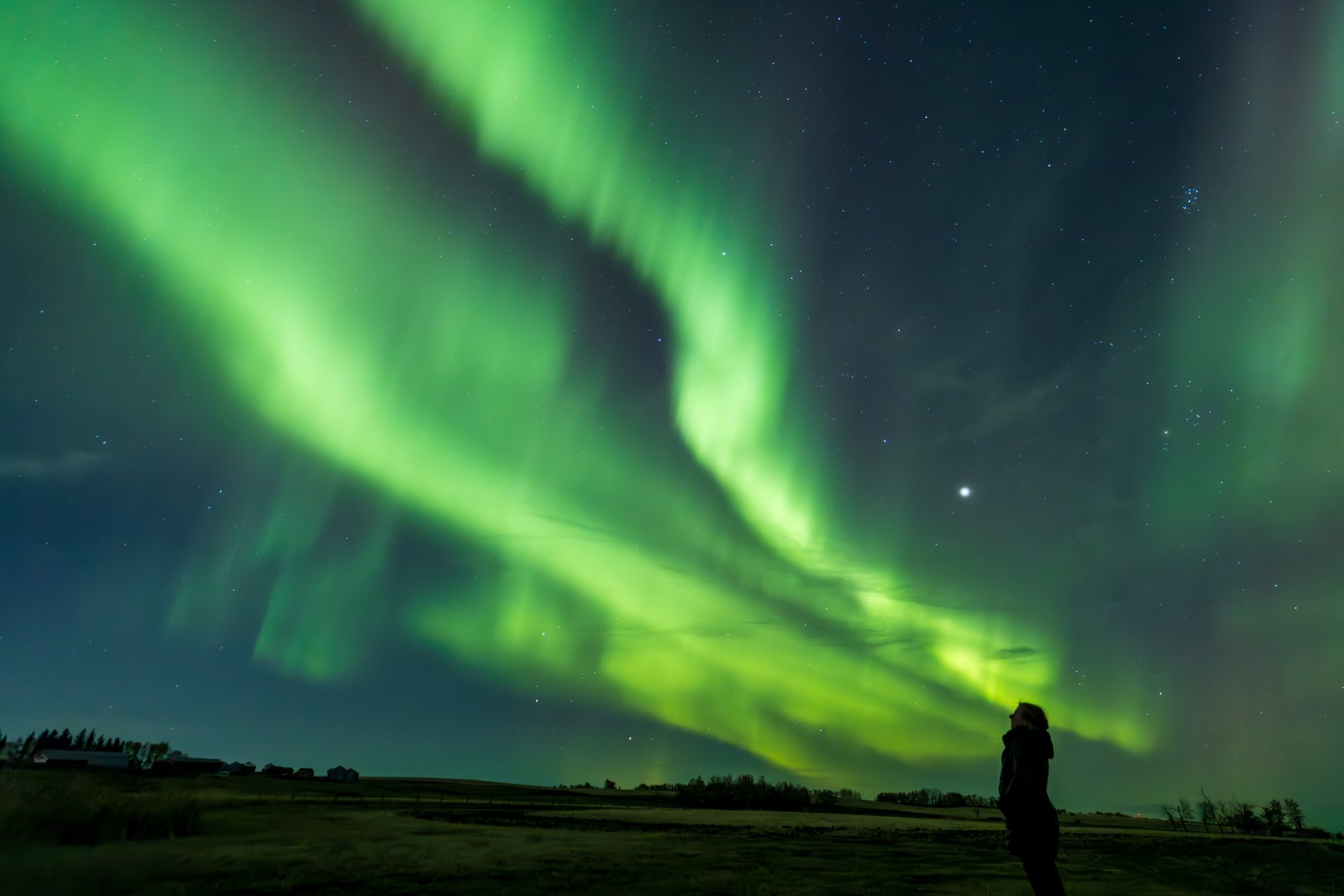
The sun went down and the moon set with it, which gave us genuinely dark sky. Within minutes it started. It filled the sky, in colours the naked eye could see without help from the camera, and it went on for hours.